Uncategorized
Lucky31 : les points à vérifier avant un dépôt d’argent

Avant d’utiliser lucky31, mieux vaut vérifier les moyens de paiement, les limites et les conditions de retrait. Ces contrôles simples évitent les mauvaises surprises, surtout si vous cherchez lucky31 bonus sans dépôt ou si vous comparez lucky31 paris en ligne avec d’autres sites. Voici une méthode claire pour déposer en euros, comprendre les délais et savoir quels documents peuvent être demandés.

Vérifier un dépôt lucky31 avant de confirmer
Le dépôt doit être adapté à votre moyen de paiement et à votre budget. Les informations publiées pour la France indiquent plusieurs solutions en euros, mais toutes ne proposent pas les mêmes plafonds ni les mêmes délais. Prenez aussi le temps de vérifier que le compte de paiement est bien à votre nom.
Quels moyens de paiement sont proposés ?
Les cartes Visa et Mastercard, Cashlib et le virement bancaire instantané figurent parmi les options en monnaie classique. Les dépôts par carte, Cashlib et virement instantané commencent à 20 € et vont jusqu’à 1 750 €. Des cryptomonnaies sont aussi listées, avec un montant maximal de 5 000 € pour le dépôt.
| Moyen | Dépôt minimum | Dépôt maximum | Information utile |
|---|---|---|---|
| Visa ou Mastercard | 20 € | 1 750 € | Dépôt indiqué comme gratuit |
| Cashlib | 20 € | 1 750 € | Dépôt indiqué comme gratuit |
| Virement bancaire instantané | 20 € | 1 750 € | Délai annoncé de 0 à 48 heures |
| Bitcoin, Litecoin ou stablecoins | 20 € | 5 000 € | Limites exprimées en euros |
Le mot « instantané » ne garantit pas toujours une réception immédiate. Les conditions prévoient un traitement dans les 24 heures pendant les horaires du prestataire, avant le délai propre à la méthode choisie. Pour l’Ethereum, un seuil supplémentaire de 0,01 ETH est publié : il ne faut pas le convertir en euros sans connaître le taux applicable.
Comment éviter un dépôt bloqué ?
Utilisez un compte bancaire ou une carte dont le titulaire correspond aux informations du compte. Un dépôt peut entraîner une demande de vérification, notamment lors du premier retrait. Les documents acceptés comprennent une pièce d’identité et un justificatif de domicile de moins de trois mois. Les photos floues, expirées ou en noir et blanc peuvent être refusées.
- Vérifiez le montant minimum et le plafond de la méthode sélectionnée.
- Contrôlez le nom du titulaire avant de valider le paiement.
- Conservez la confirmation du dépôt et la référence de transaction.
- Ne rejouez pas immédiatement un montant dont vous pourriez avoir besoin.
Comprendre les limites, les bonus et le retrait
Un dépôt ne fonctionne pas isolément : il peut être lié à un bonus, à une règle de mise ou à un contrôle financier. Lire les conditions avant de cliquer sur « confirmer » permet de distinguer l’argent réel, les fonds promotionnels et les sommes encore bloquées.
Quelles règles regarder avant d’accepter une offre ?
L’offre de bienvenue publiée prévoit 100 % jusqu’à 100 € sur le premier dépôt, puis 50 % jusqu’à 50 € sur le deuxième. Chaque dépôt doit atteindre 20 €. Le bonus demande une mise de 30 fois le dépôt additionné au bonus, tandis que les gains de tours gratuits demandent 35 fois leur montant. La mise maximale pendant cette condition est de 5 € par tour.
| Règle | Condition publiée | Point à contrôler | Conséquence possible |
|---|---|---|---|
| Acceptation du bonus | Dans les 3 jours | Activation manuelle dans le compte | L’offre peut rester inactive |
| Durée de mise | 30 jours | Date de réclamation | Forfait ou gains concernés |
| Mise maximale | 5 € par tour | Bonus et doublement compris | Violation possible des conditions |
| Retraits ordinaires | 4 000 € par semaine | Plafond mensuel de 16 000 € | Versement fractionné possible |
Le site indique aussi une règle de mise d’au moins une fois le dépôt en argent réel avant un retrait, indépendamment des exigences du bonus. Les pages relatives aux frais ne sont pas parfaitement concordantes : certains moyens sont affichés comme gratuits, tandis que la FAQ prévoit des frais après un quota mensuel non chiffré. Vérifiez donc le montant affiché avant l’envoi.
- Ne confondez pas un remboursement avec une annulation de bonus : les deux opérations n’ont pas nécessairement le même effet.
- Ne supposez pas que chaque jeu est compatible avec une promotion : les jeux avec fonctionnalité d’achat de bonus contribuent à 0 %.
- Gardez une marge sous le plafond hebdomadaire si plusieurs retraits sont prévus.
- Contactez le support si le solde ne correspond pas au montant confirmé.
Pour gérer le risque, lucky31 permet de définir des limites de dépôt quotidiennes, hebdomadaires ou mensuelles. Une réduction est immédiate, tandis qu’une augmentation prend 7 jours. Les pauses disponibles vont de 24 heures à un mois. Ces outils sont plus utiles qu’une décision prise après une perte.
Conclusion : contrôler avant de déposer
La bonne approche consiste à commencer par un montant modéré, vérifier la méthode choisie et conserver toutes les preuves de paiement. Lisez ensuite les règles de bonus et de retrait, car un dépôt de 20 € ne signifie pas que l’argent sera automatiquement disponible. Si vous souhaitez vous inscrire sur lucky31 s’inscrire, faites-le seulement après avoir confirmé votre identité, vos limites et les conditions applicables à votre offre.

How Ferragamo Bag Design Through the Years

Long before handbags came onto the scene, Salvatore Ferragamo had already established his name on shoes—yet the house’s philosophy behind bag design carries those very preoccupations that made him famous: anatomy, balance, and construction respectful of how someone actually moves through a day. Tracing the evolution of the Ferragamo bag means charting shifts in how women worked, journeyed, and presented themselves across nearly a century. It isn’t just a timeline of shapes and hardware; rather, it goes deeper. It chronicles how a Florentine workshop answered changing lives while never abandoning its own standards of craftsmanship. Whoever browses a Ferragamo shop today is met with the cumulative outcome of decades of modest, purposeful changes rather than abrupt overhauls.
The reason that makes this progression worth studying is the discipline behind it. Many luxury houses run hard after fleeting fashion cycles, rolling out and pulling styles within just a couple of seasons. Ferragamo bags have traditionally evolved at a slower pace, favoring structural refinement over novelty. Such patience is reflected in pieces still referenced by design teams today, decades following their initial launch. It also accounts for why vintage Salvatore Ferragamo bags stay sought-after instead of feeling outdated.
The 1940s through the 1960s: The Formative Beginnings
In 1927, Salvatore Ferragamo founded his Florence atelier; however, it was over the decades that followed that handbags turned into a significant piece of the business, rooted in the same leather expertise applied to footwear.
Compact, structured, and built around a single dominant handle or clasp, early Ferragamo bags ferragamo tote sale of the 1940s and 1950s embodied the postwar preference for practicality over ornamentation.
It was common to see, reflecting the formal attire shapes of the era.
By the 1950s, the label had built standing among European and American clients who sought craftsmanship that equaled couture-level shoes. Hide selection was already a point of pride, with vegetable-tanned leathers sourced via tanneries based in Tuscany that Ferragamo maintained close relationships with. This is a detail that still matters: many current Salvatore Ferragamo bags trace their leather sourcing philosophy back to these very regional supply networks.
Strict tailoring began to relax, and that decade introduced softer, easier silhouettes as a result.
The earliest genuine style divide in the lineup was marked when relaxed, hobo-style shapes began emerging beside the structured frame bags.
Ever since, the label has repeatedly circled back to a twofold design identity — structured against soft — first sown in this period.
The Seventies and Eighties: Signature Hardware paired with Bold Identity
Brand signaling grew bolder for Ferragamo bags during that decade. Rather than afterthoughts, the Gancini clasp, gold-tone fittings, and exposed metal hardware turned into defining design elements. Originating on footwear before crossing over to bags, this horseshoe-shaped clasp inspired by architectural ironwork Ferragamo admired in Florence still stands as one of the most iconic pieces of hardware within the ferragamo bags lineup today.
When fashion embraced maximalism through the 1980s, bag proportions swelled. Structured totes and angular top-handle styles with standout Gancini clasps emerged as a status symbol in Milan, Rome, and New York alike. This era sealed the idea of the Ferragamo bag as a instantly identifiable object rather than a purely functional accessory — a piece you could spot from across a room by its hardware shape alone.
It’s worth noting that this era also expanded the brand’s international retail footprint significantly, with boutiques opening across the US and Asia. That expansion meant bag design had to satisfy a wider range of climates, dress codes, and carrying habits, which nudged the house toward more versatile sizing than the rigid, single-purpose bags of the 1950s.
Sleek Form Meets Purpose: That Nineties-to-2000s Stretch
With the 1990s came a sharp style reset. Runways were dominated by minimalist tailoring, while handbag design echoed the change. Even as the Gancini persisted, merely becoming more compact and understated on numerous designs, the house had already answered the correction through purer silhouettes, sleeker leathers, and more restrained hardware.
The 2000s saw the introduction of more overtly structured top-handle bags aimed at a professional, jet-setting clientele. This is arguably when the modern template for what shoppers now search as “best ferragamo bags” started taking shape: mid-size, structured, with a clear hardware signature and enough versatility to move between office and evening use. Craftsmanship details like hand-stitched edges and reinforced base panels became standard rather than exceptional.
The range of leathers also broadened significantly throughout this timeframe. Entering rotation all at once were textured Saffiano-style leathers, sleek calfskin, and suede options—each granting the same silhouette another guise depending on finish. That adaptability is part of why certain 2000s-era shapes have held up well enough to continue to appear, in reworked form, in present-day lineups.
The It-Bag Strategy’s Climb to Prominence: A Look Back at the 2010s
By the 2010s, the house had staged its most deliberate push into the “it-bag marketplace” — a space that labels like Chanel and Céline had previously shown to be highly lucrative. It became standard for named bag lines to receive consistent, seasonal updates, providing regular clientele with an annual incentive to return to the Ferragamo shop instead of treating a handbag as a single, standalone investment.
Color, across this era, became a bolder design tool in addition. Whereas earlier decades were dominated by black, cognac, and neutral tones, the brand’s 2010s bag lines rolled out saturated seasonal colorways — reds, cobalt blues, and pastels — often paired with the identical structured shapes that had shaped earlier decades. Revived through bolder, more sculptural forms, the Gancini clasp at times was enlarged to become the focal point of the bag rather than a subtle detail.
Working alongside contemporary creative direction also tightened the label’s runway-to-retail pipeline. Collection pieces revealed on the runway started arriving in stores more quickly, a shift that mirrored broader industry pressure to compress the gap between design and commercial availability.
From the 2020s Through 2026: Structured Design, Sustainability, and Archival Return
As 2026 approaches, Ferragamo’s bag design language sits at an notable intersection: archive revival meets contemporary material responsibility. Design cues borrowed directly from 1950s and 1970s frame bags surface in several current lines, relaunched with modernized dimensions suited to how people now carry their things — phones, cards, streamlined daily essentials rather than bulky wallets and compacts.
Material sourcing has also become a stated priority, with increased use of traceable leather and more transparent supply chain communication compared to earlier decades. This doesn’t mean a wholesale reinvention of manufacturing, but it does reflect an industry-wide expectation that luxury buyers in 2026 want more information about where their salvatore ferragamo bags actually come from.
The Gancini remains a constant thread across new releases, appearing in matte, polished, and oversized variations depending on the line. This consistency is strategic: it gives new customers an easy visual entry point into the brand’s identity while giving longtime buyers something recognizable across otherwise very different bag shapes.
A Quick Look at Design Eras Compared
| Era | Dominant Silhouette | Defining Feature | Common Use |
|---|---|---|---|
| 1940s–1950s | Framed, structured bags | Sturdy metal clasp | Formal day attire |
| 1960s | Loose hobo forms | Minimal hardware | Relaxed daytime carry |
| 1970s–1980s | Square-cut totes and top-handle bags | Statement Gancini clasp | Status signaling |
| 1990s–2000s | Refined structured silhouettes | Discreet hardware | Professional versatility |
| 2010s | Signature it-bag collections | Sculptural, enlarged Gancini | Standout seasonal items |
| 2020s–2026 | Reissues drawing on the archive | Traceable leather, varied Gancini finishes | Everyday minimal carry |
Why This History Matters to Today’s Shoppers
Understanding this progression helps explain why a Ferragamo bags overview rarely fits into a single style category. The catalog spans structured heritage shapes, minimalist 2000s carryovers, and bold 2010s statement pieces, often offered side by side. That range is a direct result of decades of layered design decisions rather than a single unified aesthetic imposed top-down.
When sizing up alternatives, it helps to think in terms of a decade’s distinct flavor more than simply following current style. A frame bag with structured lines pays homage to the house’s earliest, most formal designs. A bag with an oversized Gancini leans into the bold 2010s statement era. Reflecting the 1990s minimalist correction, a tote with cleaner lines and subdued hardware captures that understated mood. Recognizing these lineages makes it easier to identify which era’s design philosophy actually suits daily habits.
At the end of the day, whether you’re on the hunt for the top-rated Ferragamo bags suited to workwear or alternatively weighing up the top Ferragamo bags for evening occasions, deciding is made easier through this contextual history. No brand keeps near 100 years of significance purely through hardware. It does so by repeatedly reworking the tension between rigidity and relaxed wear — the very balancing act Salvatore Ferragamo began when he first redirected his craft from shoes to bags, and a balance the house still hones with every line introduced under the Ferragamo name in the present day.
Palm Angels Clothing Gifting Guide for Streetwear Fans
Discovering the ideal offering for someone who eats, sleeps, and breathes streetwear can feel like walking through a obstacle course of hype product drops, exclusives, and intensely specific aesthetics. Get it right and you emerge as the gift-giving champion of their friend group. Miss the mark and that carefully chosen garment sits unused in a closet. Palm Angels occupies a exceptionally present-friendly niche in the designer streetwear industry because it unites identifiable branding with everyday styling—gift recipients immediately know they are looking at something special, and the products fit with most current wardrobes. Started in 2015 by Francesco Ragazzi, the house is inspired by Los Angeles skateboarding culture and Milanese sartorial tradition to craft clothing that speaks to everyone from Gen Z buyers to established style experts. This resource explores every spending bracket and enables you choose Palm Angels pieces that will genuinely excite the streetwear fan in your life heading into 2026.
Why Palm Angels Makes an Outstanding Present
Not every upscale streetwear label works well into gift territory. Some are too niche, others too divisive, and many are short on the spectrum of pricing tiers required for diverse spending levels. Palm Angels excels for many reasons. Brand recognition is exceptionally high—according to the Lyst Index, the house has sat among the top 20 hottest brands across the globe since 2022, reaching the top 15 in late 2025. The lineup covers from accessories under $200 to premium outerwear above $2,000, giving buyers meaningful room to maneuver. The visual identity resonates across niches: skate, hip-hop, minimalist luxury, or creative mix-and-match dressing all spot something in the lineup. Garment quality and Italian production warrant the investment, with items surviving to constant wearing. Before settling on a particular item, assess what the individual actually reaches for. Do they like loud graphics or discreet tonal branding? Study their Instagram or take note during your time together—this detective work delivers results enormously.
Gift Suggestions Under $300
The under-$300 bracket provides some of the most crowd-pleasing items—products that feel upscale without calling for a substantial financial spend. The Palm Angels iconic ball cap at $195-$245 is one of the brand’s top-selling items and is available in various current shades, making it new palm angels sweatsuit an perfect gateway. Phone cases bearing the palm motif or gothic lettering range from $75 to $120, bringing daily-use high-end touch. Socks in logo-banded packs of two or three sit around $80-$120 and have evolved into a real movement in luxury present buying. Winter hats for winter are priced at $145-$195 with excellent knit fabrication equaling mainline knitted garments. Mini leather goods like card cases and key holders complete this tier, delivering functional luxury enjoyed every single day. These goods avoid the most common pitfall in clothing gift-giving—getting the incorrect fit—since most are one-size-fits-all.
Cost-Conscious Recommendations at a Glance
| Item | Price Range (USD) | Best For | Risk Level |
|---|---|---|---|
| Logo Baseball Cap | $195 – $245 | Casual wearers, accessory lovers | Low |
| Phone Case | $75 – $120 | Tech-savvy recipients | Very Low |
| Logo Socks (2-3 pack) | $80 – $120 | Stocking stuffers, fun add-ons | Very Low |
| Knit Beanie | $145 – $195 | Cold-weather dressers | Low |
| Leather Cardholder | $175 – $250 | Minimalist wallet users | Low |
These work particularly well as bday gifts, festive presents, or “no occasion” buys proving you are tuned in to someone’s hobbies. The minor probability of error level across the board means you are not going to fail on dimensions, color taste, or personal taste. Accessories also remove the number-one issue in style gift-giving—fit guesswork—since caps are universal fit, phone cases are device-specific, and leather goods are universal. If you want to include more care, pair two gifts from this tier together, such as a cap and a cardholder, for a hand-picked pairing that feels more considered than a standalone product.
Gifting Picks from $300 to $700
This middle tier is where Palm Angels’ defining identity is most evident and the optimal bracket for shopping for someone who already appreciates streetwear. The timeless logo t-shirt at $295-$395 is perhaps the brand’s most recognizable item—a tee showcasing the PA Bear motif, palm motif, or limited-edition art works as both casual wear and a collector’s item retaining resale value. Hoodies in the $395-$595 range offer impressive gift-giving wow factor in the label’s signature substantial cotton fleece that feels markedly separate from high-street versions. Sweatpants at $350-$495 round out the home-to-street kit. For subtlety lovers, the tonal logo crewneck at $395-$495 offers the Palm Angels experience without loud branding. This tier is tailor-made for milestone occasions—anniversaries, academic achievements, or important celebrations where you desire memorable impact.
Sizing Advice for Clothing Gifts
Giving clothing always brings sizing risk, and Palm Angels’ Italian sizing can be complicated. The brand as a rule runs aligned with Italian sizing, feeling somewhat slim compared to American standards—many buyers choose one size larger for a loose streetwear fit. A medium in Balenciaga or Off-White normally aligns with a medium in Palm Angels. The 2025-2026 ranges have turned a touch roomier in line with the loose shape trend. When ordering from SSENSE or the Palm Angels website, review detailed size charts with chest measurement, body length, and arm measurements. If unsure, include a store receipt—most high-end retailers include 14-30 day exchange timeframes giving recipients ability to trade.
High-End Gifts Above $700
When the celebration calls for something exceptionally impressive, Palm Angels’ premium pieces deliver the jaw-drop moment. Bomber jackets at $895-$1,400 boast stitched details, leather accents, and limited artwork. The leather jacket at $1,800-$2,500 serves as living art maintained for years. Full tracksuit sets totaling $800-$1,200 produce complete head-to-toe looks. Collab pieces like Moncler x Palm Angels offer both design and resale value. At this budget, packaging is important—Palm Angels delivers in luxury boxes with protective tissue and signature stickers. Take it up further with a hand-penned note explaining why you chose that piece, calling back to something the person has sported. Some sellers offer additional wrapping services that brings special feeling to the unpacking. Think about matching the main present with a minor accessory from the under-$300 tier for complete packaging.
Where to Source and Validate Genuineness
Palm Angels’ cultural cachet has created a shadow knockoff scene, making purchase platform critically significant. Always order from certified platforms: the main Palm Angels website, big-name stores like Selfridges or Nordstrom, and trusted platforms like SSENSE, Farfetch, and END Clothing. These confirm real merchandise and come with simple returns vital for presents. For secondary market shopping, use platforms with authentication services—Vestiaire Collective offers in-house verification, and Grailed has community-driven authentication bolstered by AI. Telltale signs include prices unrealistically cheap, thin seller history, and low-quality images. Authentic items feature consistent thread lines, precisely registered fonts, and particular inside label printing that imitations regularly get inaccurate. If it’s an option, compare the garment against product images on the official Palm Angels site before purchasing from any outside source.
Purchase Timing and Seasonal Tactics
When you buy makes a difference almost as much as what you buy. Sale-period sales in January and June-July deliver 20-40% reductions on previous-season items that stay perfectly stylish. New releases come out in February-March for Spring/Summer and September-October for Fall/Winter, so that the person you’re gifting get the newest looks. For year-end present shopping, shopping in early November dodges delivery issues and stock shortages—in-demand items in typical sizes often disappear by mid-December. Black Friday deals from secondary stores from time to time extend to Palm Angels. Planning around these windows guarantees the optimal variety, best price, and assurance that your present shows up on time. Giving Palm Angels to a streetwear fan is one of the most guaranteed ways to prove you appreciate their passion, and the brand’s cultural relevance in 2026 ensures whatever you choose will be sported, loved, and very surely displayed within a short time of receiving.
Leather or Suede at The Row: Where the Extra Money Ends Up
Fifteen hundred and twenty dollars. Observed 2026 pricing sets the India 10.00 in leather at $3,850 and the same bag in suede at $5,370 — identical silhouette, identical dimensions, identical hardware, one material change. The pattern holds across the line, which tells you it is a costing decision and not a seasonal accident. Anyone comparing the row bags at the top of the range encounters this as the biggest non-size variable at work, and the one that goes unexplained. The honest version of the answer turns on hide yield, finishing labour, durability and how each material holds up years later on the secondary market. This piece weighs calfskin and suede against each other on all four counts, using observed market prices rather than an official list, since the brand publishes none.
What the Premium Looks Like in Numbers
The evidence comes first, because the suede surcharge is consistent enough to be measured. On the observed 2026 line-up, three pairings give the same silhouette in both materials, and the dollar spread stays stable across the India family. The Agnes 15 does not follow suit, with a slimmer gap in both dollar and percentage terms, so the premium is no fixed rule. That same model also appears in a canvas blend at $4,300, seven hundred dollars under its own leather version, closing out the material ladder from canvas up through calfskin to suede. Remember that the number in each model name is just the bag’s width in inches, so these are genuinely like-for-like comparisons rather than size steps in disguise. Prices swing with stock and stockist, so treat the table as a snapshot of one moment in the market.
| Model | Leather, observed 2026 | Price in suede, observed 2026 | The gap |
|---|---|---|---|
| India 10.00 | $3,850 | $5,370 | +$1,520, around 39% |
| India 12.00 | $3,890 | $5,450 | +$1,560, about 40% |
| Agnes 15 | $5,000 | $5,800 | +$800, about 16% |
What Calfskin Does
Calfskin carries the structure across the catalogue, and it is why so many of these bags stand up when empty. Given a defined shape, it holds it, and that matters for a house whose products are identified by outline rather than by a logo. Because it accepts a range of finishes, one hide type can produce objects that have little in common visually. The Soft Margaux 10 is listed as one hundred https://therowbags.org/ percent calfskin in a matte grained finish with a cotton herringbone lining, while the Margaux Shoulder 12 backs calfskin with a full lambskin lining. Genuine calfskin at this level feels substantial and soft at the same time and drinks light rather than bouncing it back, which is a reliable way to read a row bag in person. It is the more forgiving of the two in daily practice, because it tolerates buffing, light conditioning and, within limits, professional repair.
Which Calfskin Finishes You Will Run Into
The calfskin in the line behaves differently from finish to finish, and that finish governs both appearance and upkeep. The variations recur across families rather than belonging to one model, so learning them once is worth it. Marks show most readily on smooth calfskin, which also reads as the most formal. Matte grained calfskin appears on the Soft Margaux family, hides wear better than the rest and functions as the workhorse of the collection. The rigidity of the compact top-handle shapes is owed to saddle calfskin, which is heavier and more structured. Polished calfskin is the dressiest of them, and its surface catches light in a way the matte finishes are engineered to avoid. Below is a short rundown of what each finish asks of the person who owns it.
- Smooth calfskin — most refined, least forgiving of scuffs and rings
- Matte grained calfskin — the best daily compromise, and it disguises light wear
- Saddle calfskin — structural and firm, holds shape hardest
- Polished calfskin — the dressiest surface, and the soonest to show handling marks
- Lambskin and nappa — used mostly as lining, exceptionally soft and easily marked
What Suede Is For
Suede is a different proposition altogether, chosen for feel and depth of colour rather than for durability. It lends the same silhouette a softer edge and a matte density that calfskin cannot reproduce, which is why it turns up on relaxed and structured shapes alike. Genuine suede here is uniformly coloured across the panel with no plastic sheen, and that evenness is one of the material’s signals when you are judging a bag in person. It reaches across the Margaux family alongside grained calfskin, saddle calfskin, canvas and nylon, and it carries several pieces beyond the current catalogue too. A suede Backpack 9 has been observed at $3,900 through a retailer; the archive Bindle, meanwhile, was a suede bag with raw-cut trims and a knotted detail, reported at roughly $1,190 originally. The Bindle Three is suede as well, observed around $1,700 on the secondary market, equipped with a single padded handle and a removable inner zipped pouch.
What Drives the Premium
Four things explain the surcharge, and none of them is branding. Because suede is taken from the inner surface of the hide, the usable area per skin shrinks and the rejection rate rises for panels large enough to cut a bag from. Colour must be even across every panel, and suede betrays inconsistency far more brutally than a grained surface does, which makes matching more expensive. The nap direction has to run correctly across seams, which adds cutting constraints that a smooth leather pattern never faces. Last, correction in production is harder with suede, because a mark that could be buffed out of calfskin cannot be removed here. That the Agnes 15 gap is $800 while the India family runs $1,520 to $1,560 suggests the premium follows how much material a pattern eats rather than any flat brand-wide uplift.
Day-to-Day With Each Material
Since there is no brand-issued care protocol for these bags, take the following as material-appropriate general guidance rather than an official instruction set. The shared rules are simple and apply to every row bag regardless of material: do not overfill, keep the bag away from direct sunlight, heat and rain, and store it in its dust bag lightly stuffed so it holds shape. After that the two diverge sharply, and nothing ruins an expensive purchase faster than treating suede like calfskin. Calfskin takes a soft dry cloth well, plus the rare neutral conditioner used sparingly. Almost nothing works on suede except a suede brush, and stains generally require professional attention. When either material picks up a mark, the ordered sequence below is the one worth following.
- Stop first, and identify the material before anything touches the mark
- With calfskin, buff gently using a soft dry cloth before anything at all, then look again
- Use neutral conditioner on calfskin sparingly and infrequently, never as routine
- On suede, a suede brush and nothing else, always working with the nap
- Never apply leather cream, wet wipes, soap or water-based cleaner to suede
- Take any genuine suede stain to a professional instead of experimenting
What Resale Does With the Premium
The secondary market repays the suede premium unevenly, and that is worth knowing before you part with it. The Row recorded 97% brand-level value retention in the Rebag CLAIR 2025 report, a first-time entry into the top tier behind only Telfar, Hermes and Goyard. The strongest individual numbers belong to structured leather pieces — the N/S Park Tote at 146%, the Margaux Tote at 107% and the Half Moon shoulder at 106%. That appreciation story sits in black and neutral calfskin in the signature silhouettes rather than across the catalogue as a whole, while canvas, nylon, sisal and seasonal-colour pieces are observed discounting. None of it counts as investment advice, and none of it turns suede into a mistake. What it means is that the suede premium should be paid for the object itself, since the resale market is unlikely to return it.
Making the Choice
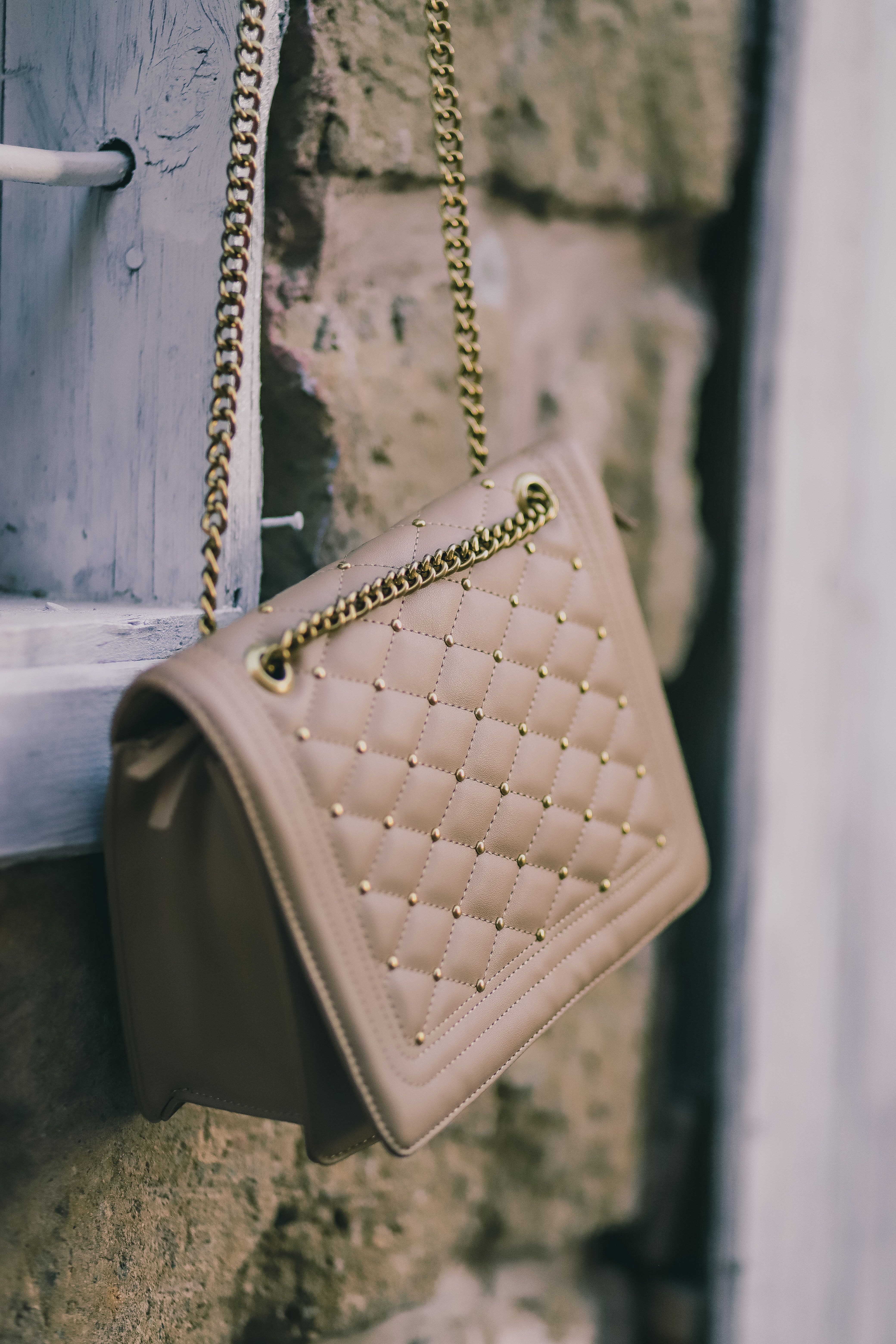
The decision is easier once you stop framing it as better versus worse. Calfskin is the answer if the bag will be in constant use, out in unpredictable weather, or expected to hold a defined shape for a decade. Take suede if the structured version is already in the wardrobe and you want the same silhouette with a different hand, or if colour depth is the whole reason you want it. If you are assembling a first serious collection of row handbags, a structured leather signature shape is usually the better first purchase, with suede added later. If both versions of a model are in front of you and you cannot decide, the tie-breaker is your climate and your storage rather than your taste. Of everything in the row fashion conversation it is the least glamorous conclusion, and the one owners reach unaided after the first rainy afternoon.
Lucky31 : les points à vérifier avant un dépôt d’argent
Ferragamo Studio Bags Ferragamo New Arrivals
Limited Edition Track Pants Francesco Ragazzi

-
اوتو كار7 years ago
تويوتا كورولا 2020 مواصفات السيارة بالكامل
-
أخبار سياحة6 years ago
تأشيرة الى خمس مناطق سياحية بسطيف الجزائري (صور)
-
أخبار سياحة6 years ago
قسنطينة مدينة الجسور المعلقة بالجزائر (صور)
-
 أخبار سياحة6 years ago
قمرت أجمل مدن تونس.. طبيعة خلّابة وحياة راقية.. صور وفيديو
-
فنادق ومطاعم 4 years ago
مطاعم تونس العاصمة: تعرف علي افضل مطاعم تونس العاصمة 2022
-
أخبار سياحة6 years ago
9 من أفضل المنتجعات الصحراوية في الإمارات: من الربع الخالي إلى دبي (صور)
-
أخبار سياحة5 years ago
منتجع ارض الاساطير في انطاليا، ذا لاند اوف ليجندز
-
فنادق ومطاعم 6 years ago
منتجع أنانتارا الجبل الأخضر سلطنة عُمان وجهتك الآمنة